Models for the people building and funding businesses.
I'm Taylor Davidson. I've built financial models since 2005, taught them to thousands of founders and investors, and run the fund financials for a venture firm. Hemrock is where all of that lives.
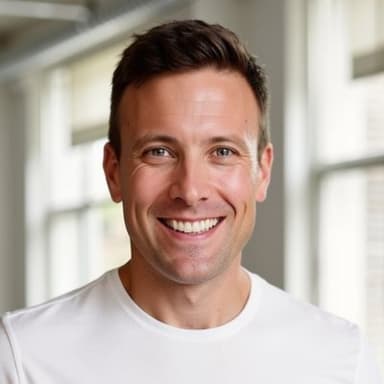
Fractional CFO at Laconia Capital Group. Formerly part-time CFO, consultant, angel investor, venture capitalist. MBA in finance and accounting from Carnegie Mellon. 55,000 users across 116 countries. The person on the other end of support.
Why this exists
The common refrain about financial models, especially for early-stage companies, is that they're useless because predicting the future is hard and the numbers are always wrong. I disagree.
Building a financial model forces you to outline how a business actually works: how a company creates products, how users find and use them, how that creates revenue and cost. The result is a set of operational metrics, financial statements, and the equation of the business. Any single view of the future is inevitably wrong. But testing a range of assumptions, stressing the key drivers, and comparing scenarios builds the insight needed to make good product, marketing, and strategy decisions.
Financial models are one of the clearest ways to make strategy actionable. That's why I care about them. But only if they're done right.
What I believe
Don't let detail obfuscate insight.
The goal isn't a more complex model. It's enough detail to make the right decision, and no more. Most of my work on the models over the years has been reducing complexity, not adding it.
Minimum viable models.
Founders don't need a perfect five-year forecast. They need enough structure to pressure-test the business, communicate with investors, and make the next decision. Build the smallest useful thing, then iterate.
Edit, don't generate.
AI is good at editing structure that already works. It's bad at generating correct structure from nothing. The Hemrock approach: start with a proven model, customize with AI, verify before you trust.
Products over spreadsheets.
Spreadsheets are a means, not an end. If a founder spends a week on a model instead of on their product, the model failed. My job is to make the financial side fast enough that you can focus on what matters.
Timeline
First financial model
Built my first model in private equity. Learned how much finance and accounting sit underneath every business decision.
Into startups
Moved to building models for startups. Found myself rebuilding from scratch for every new business.
First public template
Released the first version of what became the Standard Financial Model. Free, open for editing, updated with every round of feedback.
First paid model
Released paid models alongside the free ones. Kept iterating based on what founders and VCs actually used.
Full-time
Began working on productized models.
Fractional CFO at Laconia
Joined Laconia Capital Group as fractional CFO. Bringing what I've learned from building models to running fund financials day-to-day.
Built to edit
Renamed Foresight to Hemrock. Rebuilt the product around AI: proven structures, edited with Claude and ChatGPT, not generated from scratch.
For founders
Plan, fundraise, build. Financial models for people running companies.
Tools for founders →For investors
Model the fund, track outcomes, report to LPs. For VC firms, syndicates, and angels.
Tools for investors →